

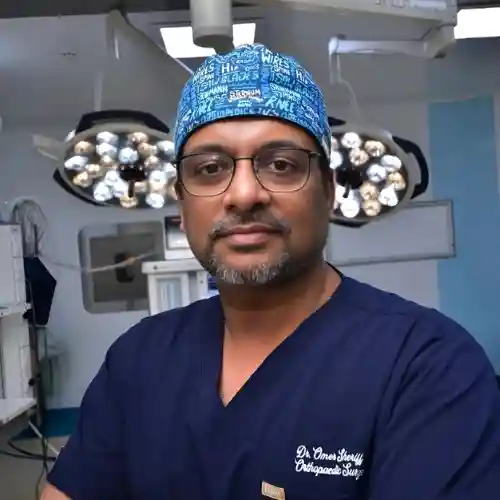
Medically Reviewed by: Dr. Omer Sheriff, MBBS, MS (Orthopaedics), Fellowship in Joint Replacement
Years of Experience: 24+ Years
Last Reviewed: October 2026
Bone, joint, muscle, ligament and tendon problems can affect movement, comfort and everyday activities. Consulting an orthopaedic doctor in Chennai can help patients understand the possible causes of their symptoms, receive an appropriate assessment and explore available treatment options.
Orthopaedic care covers a range of conditions, including osteoarthritis, knee and hip pain, fractures, sports-related injuries, ligament tears and certain spinal disorders. Treatment depends on the diagnosis, symptom severity, general health, activity level and individual needs.
What Does an Orthopaedic Doctor Treat?
An orthopaedic specialist assesses conditions affecting the musculoskeletal system, which includes bones, joints, muscles, ligaments, tendons and related structures. Depending on their qualifications and area of practice, orthopaedic doctors may assess and manage:

- Knee pain and arthritis: Joint discomfort, stiffness and difficulty walking or climbing stairs.
- Hip conditions: Pain, restricted movement and joint degeneration.
- Fractures and trauma: Bone injuries resulting from falls, accidents or other trauma.
- Sports injuries: Ligament sprains, tendon injuries and conditions affecting joint stability.
- Shoulder and elbow problems: Pain, stiffness and soft-tissue injuries.
- Spinal conditions: Selected causes of back pain and restricted movement that require orthopaedic assessment.
Not every musculoskeletal problem requires surgery. A clinical examination helps determine whether further investigations, non-surgical management or a surgical opinion may be appropriate.
How to Choose an Orthopaedic Doctor in Chennai
When selecting an orthopaedic doctor, consider the following factors:
- Relevant qualifications: Verify the doctor’s medical qualifications, specialist training and registration with the appropriate medical council.
- Experience relevant to your condition: Look for experience in assessing the specific joint, injury or musculoskeletal problem you are concerned about.
- Explanation of treatment options: The doctor should explain the potential benefits, risks, alternatives and limitations of recommended treatments.
- Access to appropriate facilities: Depending on your condition, diagnostic imaging, hospital facilities and rehabilitation services may be needed.
- Follow-up and rehabilitation: Ask about recovery monitoring, physiotherapy and activity modification when these are relevant to your treatment.
Rather than relying solely on rankings, testimonials or promotional claims, patients should consider verified credentials, clear communication and the suitability of the proposed treatment plan.
Orthopaedic Consultation and Diagnosis
An orthopaedic consultation generally begins with a discussion of symptoms, previous injuries, medical history, medication use and daily activities. The doctor may examine the affected area, assess movement and stability, and evaluate how symptoms affect function.
Depending on the findings, investigations such as X-rays, ultrasound, CT scans or MRI may be recommended. Not every patient needs imaging; the decision depends on the clinical assessment.
The diagnosis and investigation results help the doctor discuss appropriate treatment options and explain when specialist referral or further evaluation may be necessary.
Surgical and Non-Surgical Treatment Options
Treatment is individualised and depends on the condition and its severity. Options may include:
- Activity modification and advice on joint protection.
- Physiotherapy and prescribed exercises.
- Medicines when clinically appropriate.
- Selected injections when indicated after discussing their benefits and risks.
- Surgical procedures for conditions where surgery is appropriate.
Procedures such as knee replacement, hip replacement, arthroscopy, ligament reconstruction and fracture fixation may be considered for selected patients. Surgery is not automatically the preferred option; the decision should follow an individual assessment and a discussion of alternatives, risks and expected recovery.
About Dr. Omer Sheriff
Dr. Omer Sheriff’s website lists qualifications in orthopaedics and a fellowship in joint replacement, with clinical interests including joint replacement, trauma, fracture management and sports-related orthopaedic conditions.
Patients considering a consultation can review his published qualifications, registration details, relevant clinical experience and available consultation locations before deciding whether to seek an appointment.
For an individual assessment, bring previous medical reports, imaging results, a list of current medicines and details of any earlier treatment. This information can help the doctor understand your history and discuss the next steps.
When Should You Seek Medical Attention?
Seek prompt medical evaluation for persistent or worsening joint pain, recurring swelling, reduced movement or difficulty bearing weight. After an injury, urgent assessment is important if there is an obvious deformity, an open wound over a suspected fracture, severe pain or inability to use the affected limb.
A limb that becomes cold, pale, numb or unusually weak after an injury requires emergency assessment. Do not delay urgent care while waiting for a routine appointment.
Medical information notice: This page provides general educational information and does not replace an individual consultation, diagnosis or treatment advice. Treatment choices and outcomes vary from patient to patient.
Orthopaedic Consultation Locations in Chennai
Dr. Omer Sheriff provides orthopaedic consultations at selected hospitals across Chennai. Patients searching for an orthopaedic doctor in kolathur can enquire about his consultation availability at Meridian Hospital, Kolathur.
For patients looking for the orthopaedic doctor in Nungambakkam, Dr. Omer Sheriff is available for consultations at Vinita Hospital, Nungambakkam, where patients can discuss their bone and joint concerns and suitable treatment options. Patients from T. Nagar and nearby areas searching for the orthopedic doctor in T.Nagar can enquire about Dr. Omer Sheriff’s consultation availability at Orthomed Hospital, Royapettah, Chennai.
Consultation timings and availability may vary, so patients are advised to confirm their appointment before visiting.
Read also: Hip Joint Replacement in Chennai


