

One wrong lift, a long day spent sitting at a desk, or even an awkward sleeping position can leave you struggling to bend, walk, or stand comfortably. Back pain is one of the most common health complaints worldwide and a leading cause of disability. According to the World Health Organization, hundreds of millions of people experience back pain each year, making it a major contributor to reduced quality of life, missed workdays, and limitations in daily activities.
The good news is that most cases of back pain improve with the right combination of movement, self-care, and treatment. Understanding why back pain occurs and learning how to manage it effectively can help speed recovery, reduce discomfort, and prevent future episodes. Whether your pain is mild and occasional or persistent and disruptive, knowing what steps to take can make a significant difference in your overall well-being.
What is Back Pain?
Back pain refers to discomfort, stiffness, tension, or soreness that occurs anywhere along the spine, from the neck down to the lower back. It can involve muscles, ligaments, joints, nerves, discs, or bones within the spinal column. The severity of symptoms varies widely. Some people experience a mild ache that comes and goes, while others develop intense pain that interferes with work, exercise, sleep, and everyday activities.
Back pain may develop suddenly after an injury, lifting heavy objects, or making an awkward movement. In other cases, it gradually appears over time as a result of poor posture, repetitive strain, aging, or underlying medical conditions. Although back pain affects people of all ages, the risk increases as people grow older, become less physically active, or spend long periods sitting.
Healthcare providers generally classify back pain according to its duration. Acute back pain lasts less than six weeks and often results from muscle strains or minor injuries. Subacute back pain typically continues for six to twelve weeks as tissues heal. Chronic back pain persists for more than three months and may require a more comprehensive treatment approach. Understanding the type of pain you are experiencing is often the first step toward finding effective relief.
What Does Back Pain Feel Like?
Back pain is not always the same for everyone. The sensation can vary significantly depending on the underlying cause, affected structures, and severity of the condition. Some individuals describe a dull, persistent ache that makes daily tasks uncomfortable, while others experience sharp pain that appears suddenly during movement. In some cases, pain may radiate into the hips, buttocks, or legs, indicating possible nerve involvement.
The specific characteristics of back pain often provide valuable clues about what may be causing it.
| Type of Sensation | Common Description | Possible Cause |
| Dull Ache | Constant soreness or discomfort | Muscle strain, poor posture |
| Sharp Pain | Sudden stabbing sensation | Sprains, injuries |
| Burning Pain | Hot or tingling feeling | Nerve irritation |
| Radiating Pain | Travels into hips, buttocks, or legs | Sciatica |
| Morning Stiffness | Difficulty moving after waking | Arthritis or inflammation |
| Muscle Spasms | Tight, painful muscle contractions | Overuse, strain, dehydration |
Some people notice that their pain worsens after sitting for extended periods, while others feel discomfort when standing, bending, or lifting objects. Paying attention to these patterns can help healthcare providers determine the most likely cause and recommend appropriate treatment options.
What are the Types of Back Pain?
Back pain can be categorized based on both its location and duration. Understanding these distinctions helps explain why symptoms differ from one person to another and why treatment approaches may vary.
Based on location, back pain may affect the upper, middle, or lower portions of the spine. Upper back pain typically occurs between the neck and rib cage and is often associated with muscle tension, poor posture, prolonged computer use, or stress-related tightness. Middle back pain affects the thoracic region and may develop due to muscle strain, spinal abnormalities, or injuries. Lower back pain is by far the most common type because the lumbar spine bears much of the body’s weight and plays a central role in movement, lifting, and balance.
Healthcare providers also classify back pain according to how long symptoms last. Acute back pain develops suddenly and usually resolves within several weeks. Subacute pain continues beyond the initial healing phase but often improves within a few months. Chronic back pain persists for more than twelve weeks and may involve ongoing inflammation, structural issues, nerve irritation, or degenerative changes within the spine. While acute back pain is often linked to temporary injuries or strains, chronic pain can have a more significant impact on physical function, emotional well-being, and overall quality of life. This is why early intervention and proper management are so important.
Causes of Back Pain
Back pain rarely occurs without a reason. In many cases, it develops because the spine and surrounding muscles are subjected to repeated stress over time. Everyday habits such as poor posture, prolonged sitting, inadequate physical activity, and improper lifting techniques can gradually place excessive strain on spinal structures.
- Muscle strains and ligament sprains are among the most common causes of acute back pain. These injuries often occur after lifting heavy objects incorrectly, sudden twisting movements, or strenuous physical activity. Although these conditions are usually temporary, they can cause significant discomfort and limit mobility.
- Age-related changes are another major contributor to back pain. As people get older, spinal discs naturally lose water content and flexibility, making them more vulnerable to degeneration and injury. Conditions such as osteoarthritis, degenerative disc disease, spinal stenosis, and herniated discs become increasingly common with age and may lead to persistent symptoms.
- Excess body weight can place additional pressure on the spine, particularly the lower back. This increased mechanical stress may accelerate wear and tear while contributing to chronic discomfort. Smoking has also been linked to back pain because it can reduce blood flow to spinal tissues and interfere with the body’s natural healing processes.
- Stress is a surprisingly common but often overlooked factor. Emotional stress and anxiety frequently cause muscle tension in the back, shoulders, and neck. Over time, this tension can contribute to pain even in the absence of physical injury.
In some cases, back pain may result from less common causes such as fractures, infections, inflammatory conditions, kidney disorders, or certain underlying diseases. Persistent or unexplained symptoms should always be evaluated by a healthcare professional.
How to Ease Back Pain Yourself
Many people assume that complete bed rest is the fastest way to recover from back pain. However, research consistently shows that prolonged inactivity may actually delay healing and worsen stiffness. In most cases, gentle movement is far more beneficial than remaining in bed for extended periods.
- Staying active within comfortable limits helps maintain blood circulation, preserve flexibility, and prevent muscles from becoming weak. Activities such as walking, light stretching, and performing normal daily tasks often support recovery more effectively than prolonged rest.
- Applying cold therapy during the first 24 to 48 hours after an injury can help reduce inflammation and swelling. After this initial period, heat therapy may be more beneficial because it relaxes tight muscles, improves circulation, and reduces stiffness. Many individuals find alternating between heat and gentle movement particularly helpful during recovery.
- Paying attention to posture is another important self-care strategy. Slouching while sitting, leaning forward when standing, or spending long hours in awkward positions can place additional strain on already irritated tissues. Maintaining proper spinal alignment throughout the day can help reduce discomfort and prevent symptoms from worsening.
- Simple lifestyle adjustments can often make a meaningful difference. Taking short walking breaks throughout the day, using ergonomic chairs, adjusting workstation setups, and avoiding activities that aggravate symptoms can all contribute to faster recovery and improved long-term spinal health.
- Although self-care measures are effective for many cases of mild to moderate back pain, symptoms that persist, worsen, or interfere significantly with daily life should be evaluated by a healthcare professional. Early intervention often leads to better outcomes and may prevent minor issues from becoming chronic problems.
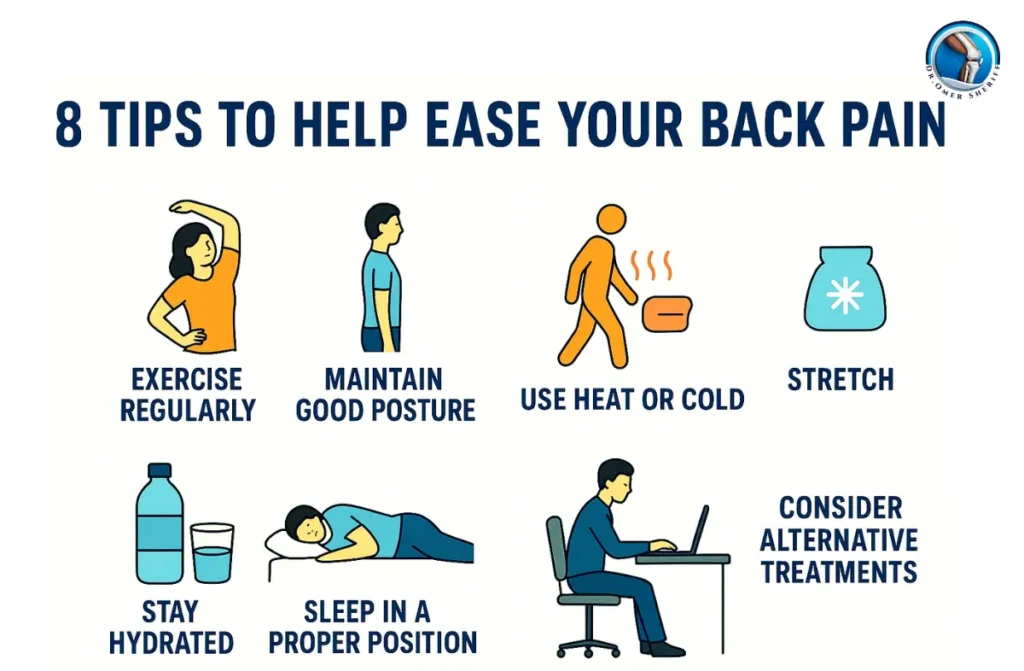
8 Tips to Help Ease Your Back Pain
- Although back pain can feel overwhelming, many people find significant relief through simple daily habits that support spinal health. One of the most effective strategies is maintaining good posture throughout the day. Whether you are working at a desk, driving, or standing for extended periods, keeping your spine properly aligned reduces unnecessary stress on muscles, joints, and ligaments. Small posture corrections may seem insignificant, but over time they can dramatically reduce strain on the back.
- Regular movement is equally important. Many individuals unintentionally worsen their symptoms by remaining inactive for long periods. While resting briefly after an injury can be helpful, excessive inactivity often leads to stiffness, weakened muscles, and slower recovery. Gentle activities such as walking, swimming, and stretching encourage healthy blood flow, maintain mobility, and help prevent muscles from becoming tight and painful.
- Strengthening the core muscles is another valuable strategy. The muscles of the abdomen, lower back, pelvis, and hips work together to support the spine. When these muscles are weak, the back often compensates by absorbing more stress during everyday movements. Building core strength through appropriate exercises can improve stability and reduce the risk of future injuries.
- Flexibility also plays an important role in spinal health. Tight muscles in the hips, hamstrings, and lower back can alter movement patterns and increase pressure on the spine. Regular stretching helps maintain a healthy range of motion and reduces tension that may contribute to discomfort.
- Learning proper lifting techniques can prevent many common back injuries. Lifting with the legs rather than the back, keeping objects close to the body, and avoiding sudden twisting movements significantly reduce strain on spinal structures. These principles are especially important for individuals whose jobs involve frequent lifting or physical labor.
- Maintaining a healthy weight can further protect the back. Excess body weight, particularly around the abdomen, shifts the body’s center of gravity and increases pressure on the lower spine. Even modest weight loss may reduce strain and improve symptoms in some individuals.
- Quality sleep is another often-overlooked factor. A supportive mattress and proper sleeping position help maintain spinal alignment throughout the night. Sleeping on the side with a pillow between the knees or on the back with a pillow beneath the knees may reduce pressure on the lower back and improve comfort.
- Finally, taking regular movement breaks can make a significant difference for people who spend much of the day sitting. Standing up, stretching, and walking for a few minutes every hour helps prevent stiffness and reduces the cumulative stress that prolonged sitting places on the spine. When practiced consistently, these simple habits can contribute to long-term back health and reduce the likelihood of recurring pain.
How to Get Rid of Back Pain: Immediate Steps
When back pain appears suddenly, taking the right actions early can help minimize discomfort and support recovery. The first priority is to avoid movements that significantly worsen symptoms while remaining as active as comfortably possible. Complete bed rest is rarely recommended because it can lead to increased stiffness and muscle weakness.
Applying an ice pack during the first 24 to 48 hours after an injury may help reduce inflammation and swelling. Ice should be wrapped in a cloth and applied for short intervals to avoid skin irritation. After the initial phase, heat therapy often becomes more beneficial because it relaxes muscles and promotes blood flow to affected tissues.
Changing positions frequently can also help. Sitting, standing, or lying in one position for extended periods may increase discomfort. Gentle walking and light stretching often help reduce stiffness and improve mobility without placing excessive stress on the spine.
Over-the-counter pain relievers may provide temporary symptom relief when used according to package instructions and under the guidance of a healthcare provider when necessary. However, medications should be viewed as part of a broader management strategy rather than a long-term solution.
Most importantly, pay attention to warning signs. If pain is severe, follows a significant injury, or is accompanied by symptoms such as weakness, numbness, or loss of bladder or bowel control, immediate medical evaluation is essential.
What is the Best Treatment for Lower Back Pain?
Many people searching for how to get rid of back pain hope for a single treatment that works for everyone. In reality, the most effective treatment depends on the underlying cause, severity of symptoms, and individual health factors. A personalized approach generally produces the best results. For most cases of lower back pain, conservative treatments remain the foundation of care. Physical therapy is widely regarded as one of the most effective options because it addresses the underlying causes of pain rather than simply reducing symptoms. Through targeted exercises and movement training, physical therapy helps improve strength, flexibility, posture, and overall function.
Regular exercise is equally important. Activities such as walking, swimming, yoga, and low-impact strengthening programs help support spinal health while reducing the risk of recurring pain. Exercise not only improves physical function but also helps maintain a healthy weight and supports mental well-being.
Heat and cold therapies can provide valuable symptom relief depending on the stage of recovery. Heat is often beneficial for muscle tension and stiffness, while cold therapy may be more effective immediately after an injury. Many individuals find that combining these approaches with movement and stretching produces the greatest benefit.
Pain-relieving medications may help control symptoms during acute episodes, allowing individuals to remain active and participate in rehabilitation. In certain situations involving nerve irritation or inflammation, healthcare providers may recommend injections to deliver medication directly to affected areas.
Surgery is generally reserved for specific conditions such as severe nerve compression, spinal instability, fractures, or structural abnormalities that do not respond to conservative treatment. Fortunately, the majority of people with lower back pain improve without requiring surgery.
The most successful treatment plans typically focus on long-term lifestyle changes rather than temporary symptom management. Improving posture, maintaining physical activity, managing stress, achieving a healthy weight, and practicing good body mechanics often provide lasting benefits that extend well beyond the resolution of a single episode.
Home Remedies for Fast Back Pain Relief
Many individuals seek natural ways to relieve back pain at home before pursuing medical treatment. Fortunately, several simple remedies may help reduce discomfort and support the body’s healing process.
- Heat therapy remains one of the most popular home remedies because it helps relax tight muscles and increase circulation. Warm baths, heating pads, and warm compresses can often provide noticeable relief, particularly for muscle-related pain and stiffness. Cold therapy may be more effective when inflammation or swelling is present.
- Gentle stretching exercises can help improve flexibility and reduce muscle tension. Stretching should never be painful, but gradual movements performed consistently may ease stiffness and improve mobility. Many people find that combining stretching with light walking produces better results than either approach alone.
- Proper hydration is another important yet frequently overlooked factor. Muscles and connective tissues function best when adequately hydrated, and dehydration may contribute to muscle cramps and discomfort. Drinking sufficient water throughout the day supports overall musculoskeletal health.
- Stress-management techniques can also play a valuable role. Deep breathing exercises, meditation, mindfulness practices, and relaxation techniques may help reduce muscle tension that develops in response to stress and anxiety. Since emotional stress often contributes to physical discomfort, addressing both physical and mental well-being can be beneficial.
- Adequate sleep is equally important. During sleep, the body repairs tissues, regulates inflammation, and restores energy. Poor sleep quality may increase pain sensitivity and slow recovery, making restful sleep an essential component of back pain management.
Symptoms of Lower Back Pain
Lower back pain can present in many different ways depending on its cause and severity. Some individuals experience a mild, persistent ache that remains localized in the lumbar region, while others develop sharp or intense pain that interferes with movement and daily activities.
Stiffness is one of the most common symptoms and may be particularly noticeable after sitting, sleeping, or remaining in one position for an extended period. Certain individuals find it difficult to stand upright, bend forward, or rotate their torso comfortably.
Muscle spasms may occur when muscles surrounding the spine tighten involuntarily in response to injury or irritation. These muscle spasms can range from mildly uncomfortable to extremely painful and may temporarily restrict movement. In some cases, lower back pain extends beyond the back itself. Pain that radiates into the buttocks, hips, or legs may indicate nerve involvement, such as sciatica. Additional symptoms including tingling, numbness, or weakness should not be ignored, especially if they worsen over time.
Risk Factors for Back Pain
Although anyone can develop back pain, certain factors increase the likelihood of experiencing it. Age is one of the most significant risk factors because spinal structures naturally undergo wear and tear over time. Degenerative changes become increasingly common as people grow older. Physical inactivity is another major contributor. Weak muscles provide less support for the spine, making injuries more likely. Conversely, occupations that involve repetitive lifting, bending, twisting, or prolonged standing can also place excessive stress on the back.
Excess body weight increases pressure on the spine and surrounding joints, particularly in the lower back. Smoking has also been associated with an increased risk of back pain because it may impair blood flow and slow tissue healing. Poor posture, inadequate workplace ergonomics, stress, anxiety, and insufficient sleep may further contribute to spinal discomfort. Recognizing these risk factors allows individuals to make proactive changes that reduce their likelihood of developing chronic back problems.
Back Pain Diagnosis and Treatment
Diagnosing back pain begins with a detailed evaluation of symptoms, medical history, lifestyle factors, and physical examination findings. Healthcare providers typically assess posture, flexibility, muscle strength, range of motion, reflexes, and neurological function to identify potential causes. Many cases of uncomplicated back pain do not require extensive testing. However, imaging studies such as X-rays, MRI scans, or CT scans may be recommended when symptoms suggest structural abnormalities, nerve compression, fractures, infections, or other underlying conditions.
Treatment recommendations depend on the cause and severity of symptoms. Mild cases often respond well to self-care measures, exercise, and physical therapy. More complex conditions may require medications, specialized rehabilitation programs, injections, or additional interventions. Early diagnosis and treatment are particularly important when symptoms persist, worsen, or significantly affect quality of life. Addressing problems promptly often improves outcomes and reduces the likelihood of developing chronic pain.
Nonsurgical Treatments for Chronic Back Pain
Chronic back pain can be physically exhausting and emotionally draining, especially when symptoms persist for months despite initial treatment efforts. Fortunately, most people with chronic back pain can achieve meaningful improvement without surgery. Modern treatment approaches increasingly focus on reducing pain, improving function, and helping individuals return to their normal activities safely and effectively.
- Physical therapy remains one of the most effective nonsurgical treatments available. A structured rehabilitation program can strengthen muscles that support the spine, improve flexibility, correct movement patterns, and reduce stress on affected structures. Physical therapists often design individualized exercise plans that address specific weaknesses and mobility limitations contributing to pain.
- Exercise therapy is another cornerstone of long-term management. Activities such as walking, swimming, yoga asanas, Pilates, and low-impact strength training help maintain spinal health while reducing stiffness and improving overall physical function. Unlike passive treatments that provide temporary relief, regular exercise helps address many of the underlying factors associated with chronic pain.
- Manual therapies may also provide benefits for certain individuals. Massage therapy can help reduce muscle tension and improve circulation, while spinal manipulation performed by qualified healthcare professionals may improve mobility and decrease discomfort in some cases. These approaches are often most effective when combined with exercise and lifestyle modifications.
- Acupuncture has gained popularity as an alternative treatment option for chronic back pain. Some studies suggest that acupuncture may help stimulate the body’s natural pain-relieving mechanisms and reduce discomfort for certain individuals. While results vary from person to person, many patients find it useful as part of a comprehensive treatment plan.
- Psychological therapies are increasingly recognized as valuable tools in chronic pain management. Living with persistent pain can affect mood, sleep quality, stress levels, and overall mental well-being. Cognitive behavioral therapy and other evidence-based approaches can help individuals develop coping strategies, reduce pain-related anxiety, and improve quality of life.
Successful treatment of chronic back pain often requires a combination of approaches rather than a single intervention. By addressing physical, emotional, and lifestyle factors simultaneously, many individuals achieve significant improvements in both pain levels and daily function.
Surgical and Other Procedures
Although surgery can be highly effective in carefully selected cases, it is generally considered only after conservative treatments have failed to provide adequate relief or when serious structural problems are present. Most people with back pain recover without needing surgical intervention.
One of the most common surgical procedures is a discectomy, which involves removing part of a herniated disc that is compressing a nerve. This procedure may help relieve symptoms such as radiating leg pain, numbness, and weakness associated with nerve compression. A laminectomy is another procedure sometimes performed to create more space within the spinal canal. It is often used to treat spinal stenosis, a condition in which narrowing of the spinal canal places pressure on nerves.
Spinal fusion may be recommended when instability exists between vertebrae. During this procedure, two or more vertebrae are permanently joined together to improve stability and reduce pain caused by movement. While effective in certain situations, spinal fusion typically requires a longer recovery period. Advances in medical technology have also led to procedures such as artificial disc replacement, which may preserve more natural spinal movement than traditional fusion surgery in selected patients.
In addition to surgery, some individuals benefit from minimally invasive procedures. Epidural steroid injections, nerve blocks, and radiofrequency ablation may help reduce inflammation and interrupt pain signals in specific cases. These treatments do not cure underlying conditions but can provide meaningful symptom relief and improve function.
The decision to undergo surgery or specialized procedures should always be made in consultation with a qualified healthcare professional after a thorough evaluation of risks, benefits, and available alternatives.
When Back Pain is an Emergency
Most cases of back pain are not medical emergencies, but certain symptoms require immediate attention because they may indicate a serious underlying condition. Seek urgent medical care if back pain is accompanied by loss of bladder or bowel control, numbness in the groin or inner thighs, significant weakness in one or both legs, unexplained fever, severe trauma, or sudden unexplained weight loss. These symptoms may indicate conditions such as severe nerve compression, infection, fractures, or other potentially serious disorders.
Pain that becomes progressively worse despite treatment or occurs alongside symptoms such as chest pain, difficulty breathing, or severe abdominal discomfort should also be evaluated promptly. Recognizing these warning signs can help ensure that serious conditions receive timely diagnosis and treatment before complications develop.
How to Prevent Back Pain
While it is not always possible to prevent back pain completely, many cases can be avoided through healthy lifestyle habits and proper body mechanics. Prevention is often easier and more effective than treating chronic symptoms after they develop. Regular physical activity is one of the most important protective measures. Exercise helps strengthen muscles that support the spine, improves flexibility, and promotes healthy movement patterns. Even moderate activities such as walking can significantly contribute to spinal health when performed consistently.
Maintaining proper posture throughout the day can reduce unnecessary strain on the back. Whether sitting, standing, or lifting objects, keeping the spine aligned helps distribute forces more evenly and reduces the risk of injury. Ergonomic workstations may be particularly beneficial for individuals who spend long hours at a desk. Learning safe lifting techniques is equally important. Bending at the knees, keeping objects close to the body, and avoiding twisting movements while lifting can dramatically reduce stress on the spine.
Weight management plays a significant role in prevention as well. Excess body weight places additional pressure on spinal structures and may contribute to degeneration over time. Maintaining a healthy weight through balanced nutrition and regular exercise can help protect the back for years to come. Adequate sleep, stress management, and smoking cessation may also support spinal health. Since multiple factors contribute to back pain, adopting a comprehensive approach to wellness often provides the greatest long-term benefits.
Conclusion
Back pain is one of the most common health concerns worldwide, affecting people of all ages and lifestyles. Whether it develops after an injury, results from poor posture, or arises from age-related changes in the spine, back pain can significantly impact daily life if left unaddressed. The encouraging news is that most cases respond well to a combination of movement, exercise, posture improvement, healthy lifestyle habits, and appropriate medical care when needed. Understanding the causes of back pain and recognizing early warning signs can help individuals take proactive steps toward recovery.
If you are searching for how to get rid of back pain, focus on staying active, maintaining good posture, strengthening your core muscles, managing stress, and seeking professional guidance when symptoms persist. Small daily habits often produce the greatest long-term results, helping you reduce discomfort, restore mobility, and protect your spinal health for the future.
Read More: Best Sports Ortho Doctor in Chennai.


